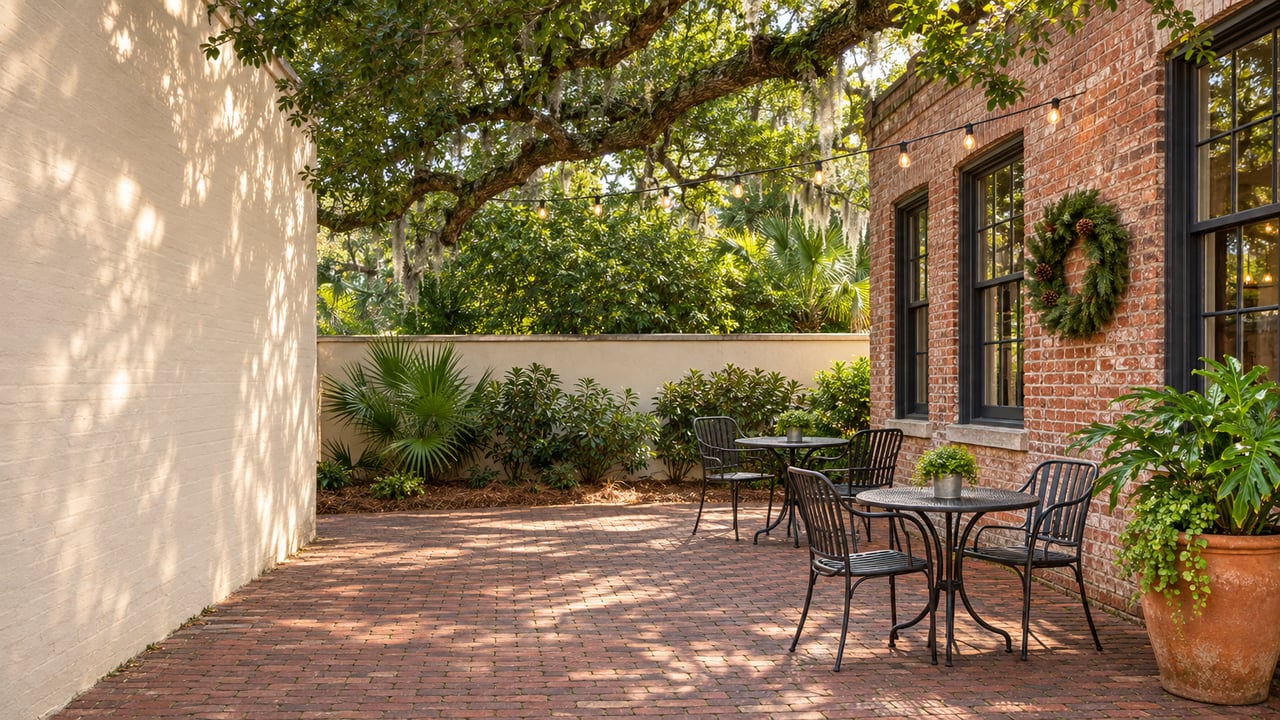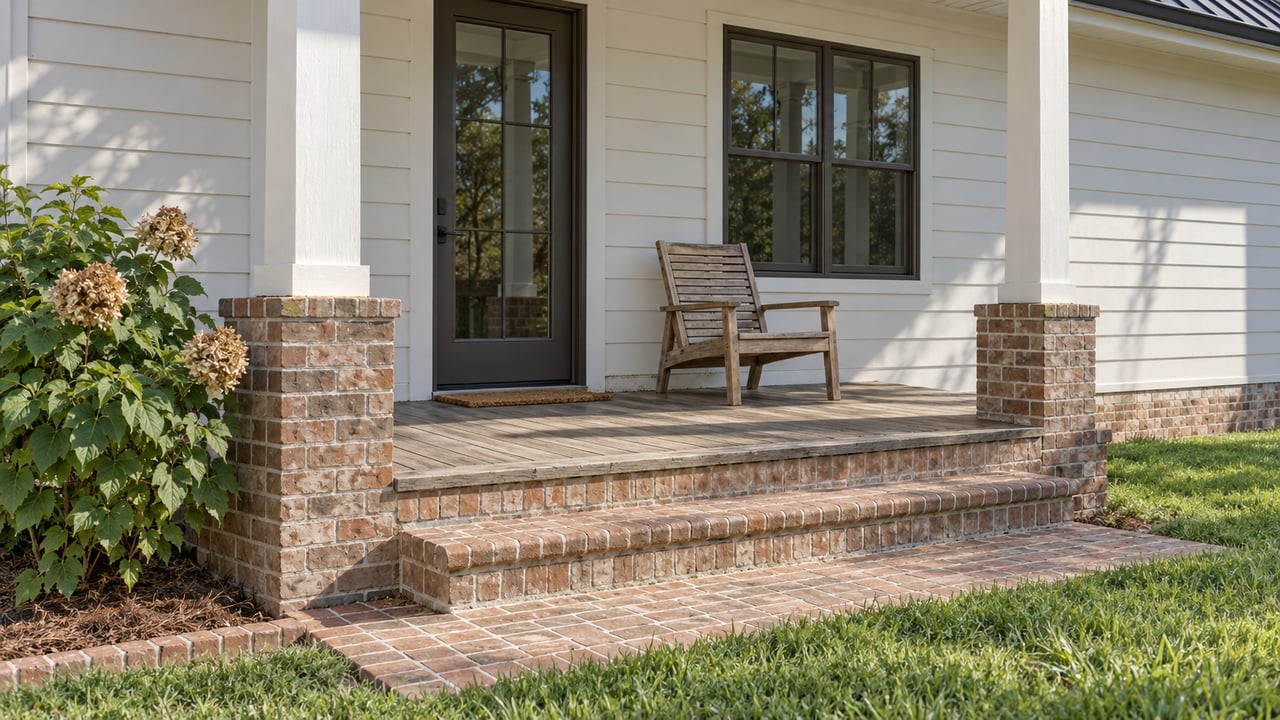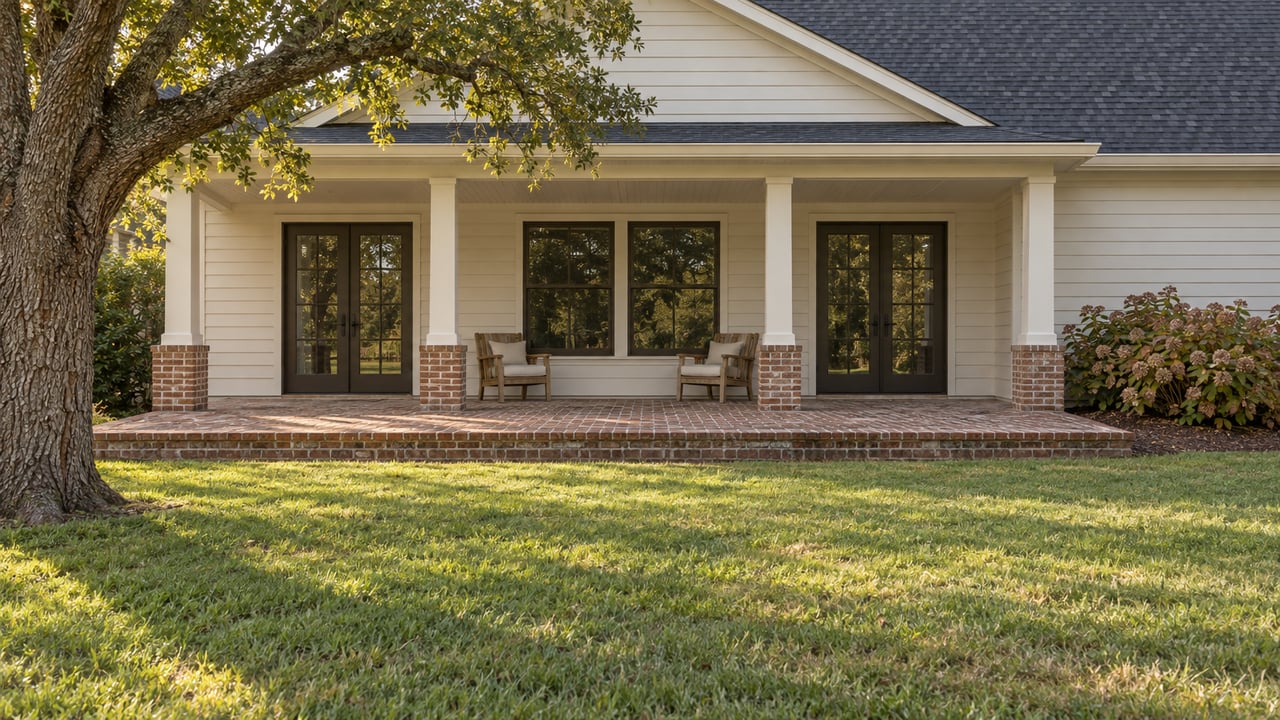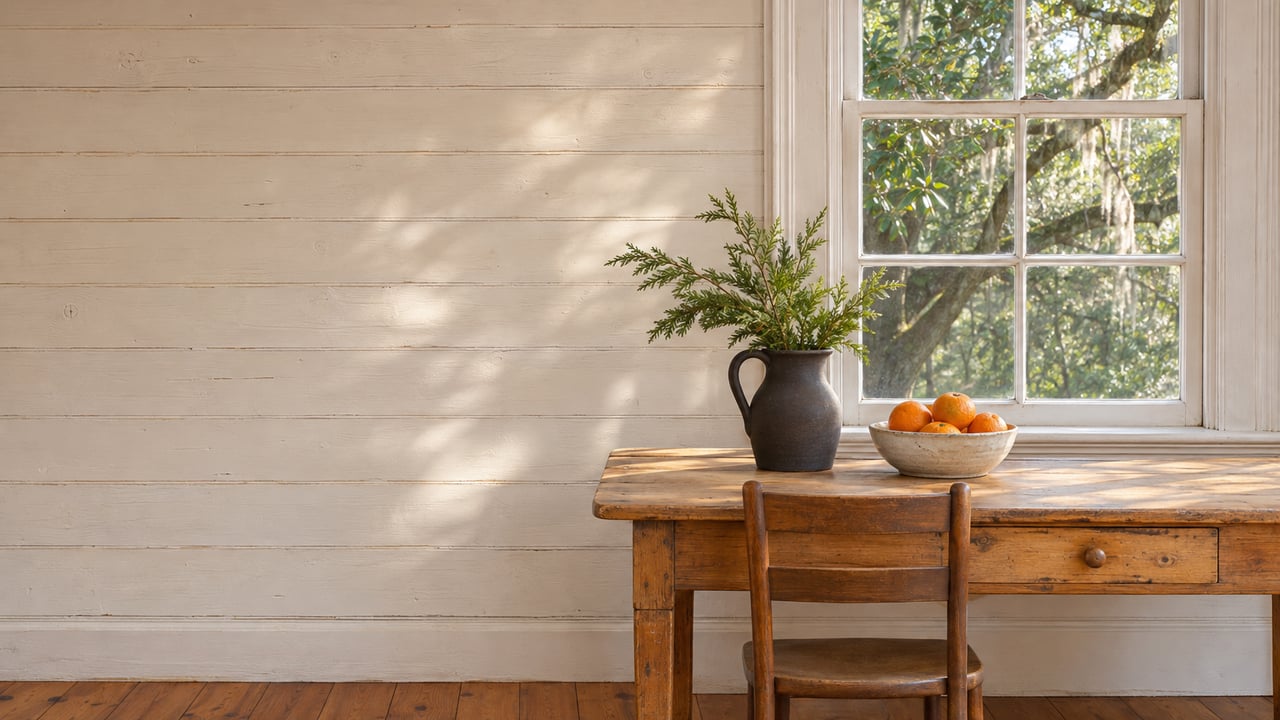
In 1859, a member of the Haile family named Benjamin wrote his name on a wall in what is now called the Trunk Room. It is the oldest dated writing the Historic Haile Homestead has identified in the house. More than 12,500 words followed it, in pencil and ink, across most of the rooms and closets of the 6,200-square-foot house at 8500 SW Archer Road.
The family that built that house is the family whose name is on your street signs, your HOA letters and the Village Center storefronts. In 2026 the Homestead kept adding to its account of who built and ran the place. That includes a rebuilt kitchen that opened in April and a list of known enslaved people that was updated in June. The holiday tours that start Dec. 5 will be the first holiday season with all of it on the tour.
What the walls actually say
"Talking Walls" makes the writing sound decorative. Mostly it is a household's paperwork. The Homestead has documented visitors' names, notes tracking how tall the children had grown, recipes, household inventories, business records and stretches of prose, all written straight onto the plaster. The Music Room and the Parlor each have more than 150 separate writings.
Read that way, the house is a record of a working cotton operation, kept by the people who lived in it. According to the Homestead's history, Thomas Evans Haile and Esther "Serena" Chesnut Haile moved from Camden, South Carolina, in 1854. They set up a 1,500-acre Sea Island cotton plantation called Kanapaha and finished the house in 1856. The family's inventories and accounts on the walls come from running that plantation.
The people who built it
Enslaved laborers built the house. The Homestead counts 56 enslaved people on the 1854 tax rolls and 66 in the 1860 slave schedules. Its research page says 69 individual identities are now known, a figure it marked as updated in June 2026. That number has gone up as research continues, which is one reason a visit this winter covers more than a visit a few years ago did.
The site names several of these people and tells part of their stories. William Watts worked as a carpenter while enslaved, stayed on as a hired hand after emancipation, and later became a farmer and landowner. Johnson Chestnut was a skilled carpenter and furniture maker who later worked for the Hailes and went on to serve on the Gainesville City Commission. Bennet Kelley was enslaved as a child, worked inside the house and was later employed by the family. His sister Flora often cooked for the household.
The tour covers this directly. The Homestead says its exhibits draw on the histories of the enslaved people, oral histories from descendants, and a video that runs from slavery through emancipation, Reconstruction, Jim Crow and racial terror.
The kitchen that opened in April
The biggest change at the site this year sits a few steps from the main house. The detached kitchen was reconstructed and opened at a grand opening and open house on April 18, 2026. Descendants of the Kelley family took part, and the kitchen is now part of the tour.
The kitchen connects back to Flora Kelley. A plantation house's cooking was done in a separate building, so the reconstruction puts back the place where she and others did much of the daily work that kept the main house running.
The organization paid for the reconstruction through fundraising. Its next projects are already set. In its fall 2026 profile with the Community Foundation's Philanthropy Hub, it says it is waiting on a contractor to build and install a new highway sign. After that it plans a capital campaign of close to $150,000 for a new roof on the main house, then about $50,000 for other preservation work.
How the name crossed Archer Road
The land stayed in the Haile family and sat largely idle for about a century. As the Gainesville Sun reported in 2020, developers Bob Rowe and Bob Kramer approached the family in 1978 about building a project they were calling Gaines Plantation. After reviewing the architecture and landscaping plans, the family let them use the Haile name instead. The Homestead stands on Archer Road west of the subdivision.
The two properties are run separately. Historic Haile Homestead, Inc. is a 501(c)(3) nonprofit. The property itself is owned by Alachua Conservation Trust and the Haile family trust: ACT holds a donated half-interest in the house and 40 surrounding acres and leases the family's remaining interest long-term. The Haile Plantation Association lists the Homestead's phone number among its local contacts. The neighborhood's trails and the Homestead's 40 acres are separate properties, so you get there by car on Archer Road, not by trail from the Haile Village Center.
Going this winter
Regular hours, according to the Homestead's contact page, are Saturday 10 a.m. to 2 p.m. and Sunday noon to 4 p.m. Docents lead three scheduled tours each day: 10:15, 11:30 and 12:45 on Saturdays, and 12:15, 1:30 and 2:45 on Sundays. Admission is $5 per person and free for children under 12, with no reservation needed. Weekday, private and group tours can be arranged in advance, depending on docent availability.
One practical note for people coming from inside Haile: the Homestead says the only way in is from Archer Road, and some map apps send drivers into a nearby neighborhood that has no access to the site. Look for the Archer Road entrance instead of following the shortest route the app suggests.
The holiday season starts the first weekend of December. Vintage Holidays Guided Tours run on weekends from Dec. 5 through Dec. 28 during regular hours, with vintage holiday decorations in the house. Private and group tours are available on weekdays by appointment, which helps if you have family visiting midweek. The program is funded in part by Visit Gainesville and Alachua County. With the kitchen open since April, it is the first holiday tour season that includes the rebuilt building.
The Homestead is run entirely by volunteers, about 30 a year according to its profile. WUFT reported in May 2026 that the site needed more volunteer docents. If you live a few minutes away and like old houses, leading the three tours on a single Saturday or Sunday is a commitment you can work into a schedule.
The next public program after the holidays is "Discovering Hidden Voices: The Enslaved of Alachua County," on Sunday, April 18, 2027, at 2:30 p.m., at a location to be announced. The speakers are Coleen DeGroff, author of "Alachua County Black Book"; Karen Kirkman, the Homestead's president and historian; and Tatanya Peterson, speaking on ancestors enslaved on the James Chesnut plantation. That date is the one-year anniversary of the kitchen's opening.
At Guidelight Realty, Andy Mauldin grew up in Gainesville and keeps track of what changes on Archer Road, not only what sells along it. If you're hosting family in December and want a few more local ideas in and around Haile Plantation, or you have a question about the neighborhood, schedule a consultation and we'll talk it through.