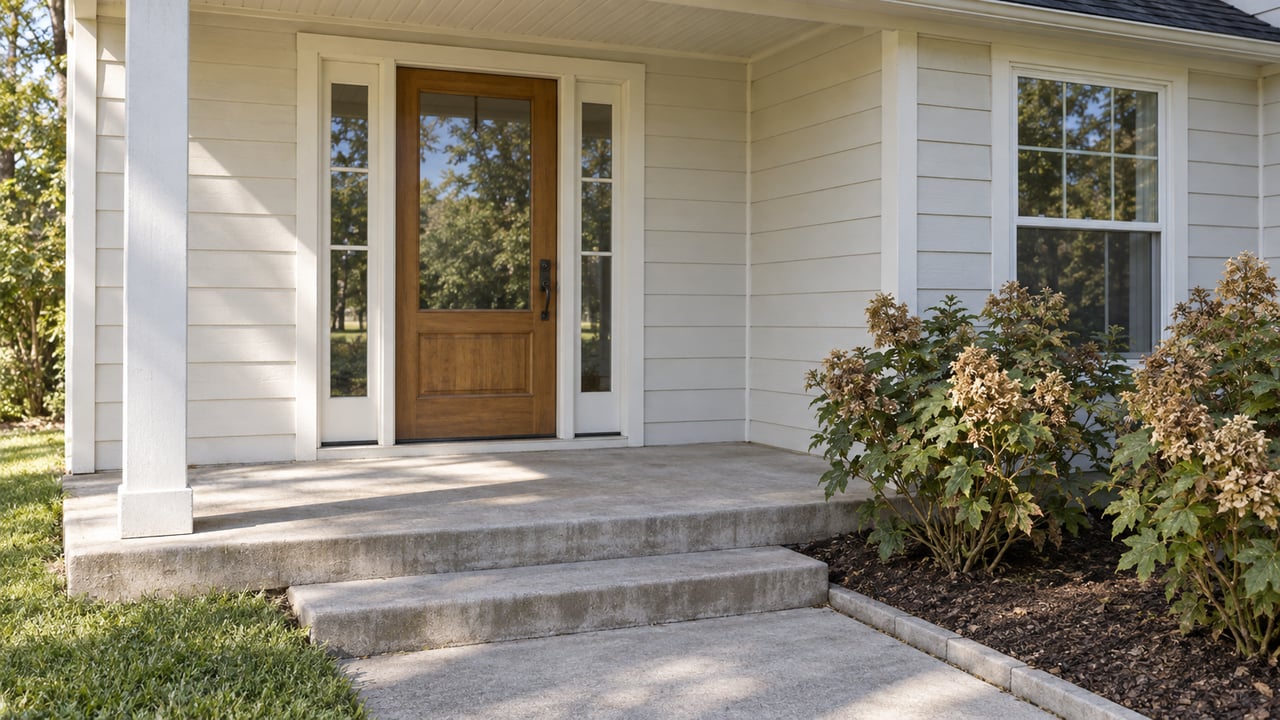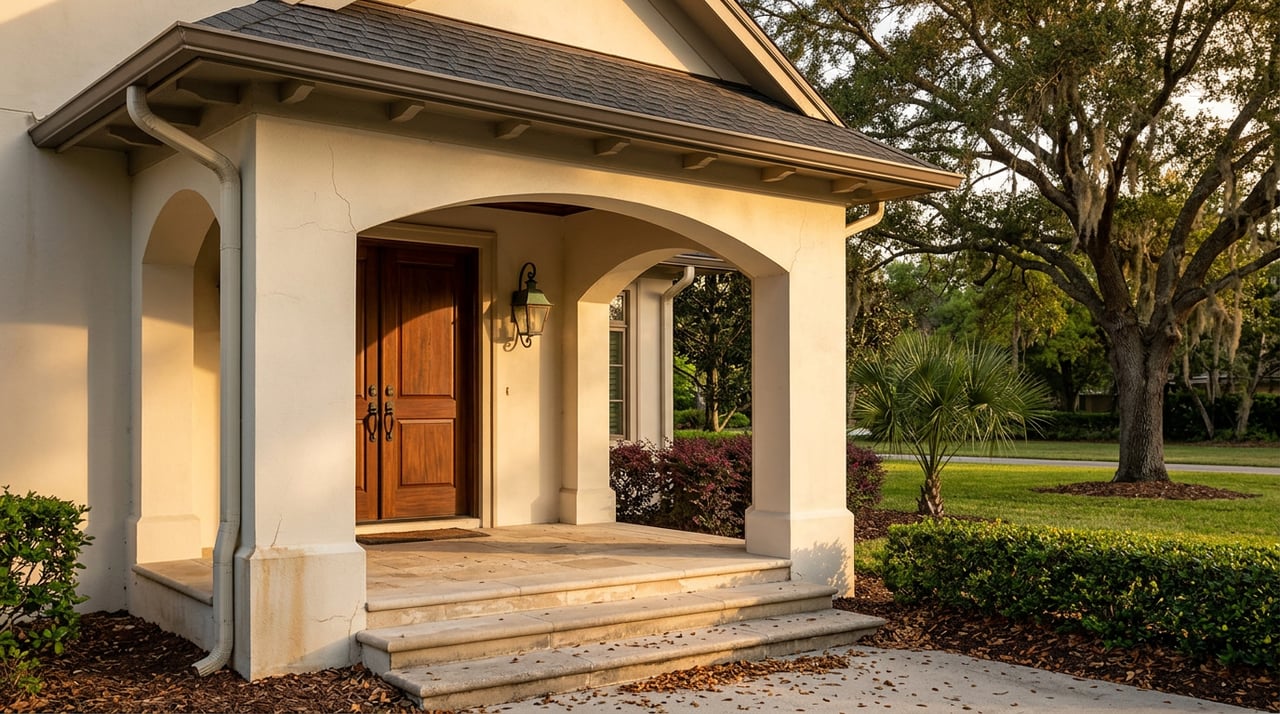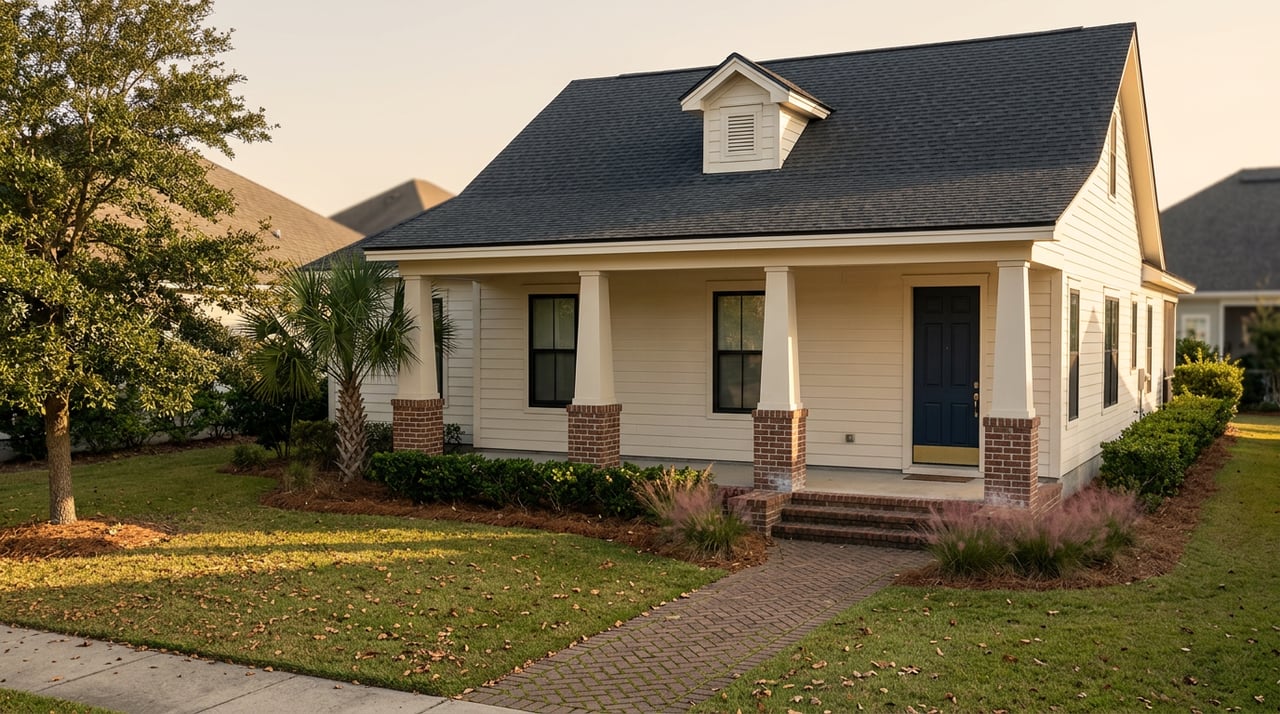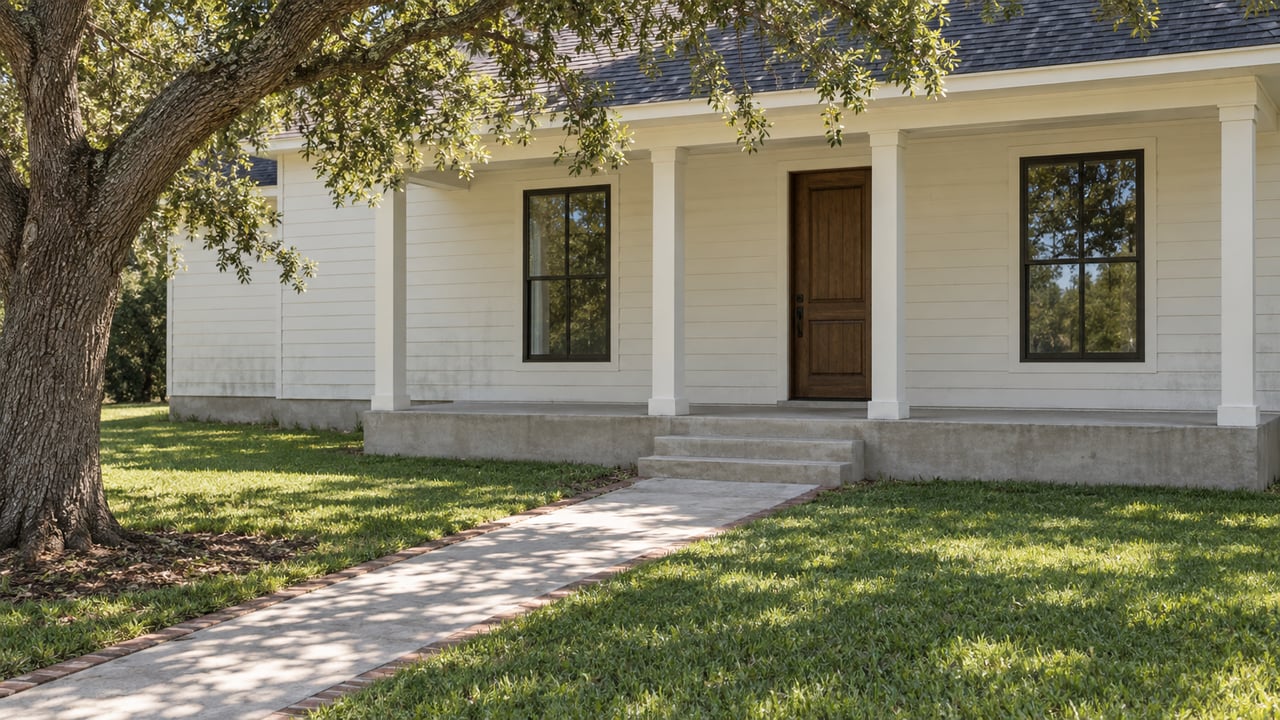
Why would two nearly identical homes in High Springs get septic quotes $20,000 apart? Same square footage, same bedroom count, same rural road. The answer has nothing to do with the house. It has to do with a line on a state water-quality map that happens to run straight through the middle of town.
Florida finalized its Santa Fe River Basin Management Action Plan in June 2025, and one of its designated zones, the Hornsby Priority Focus Area, sits entirely in Alachua County and includes the cities of High Springs and Alachua. If a property falls inside that boundary, any new or replacement septic system now has to meet the state's Enhanced Nutrient Reducing standard, no matter how big the lot is. A comparable property in the Santa Fe Basin just outside that boundary only faces the same requirement if the lot is an acre or smaller. Two houses on either side of an invisible line can carry two very different repair budgets, and neither the listing photos nor the MLS sheet will tell you which side you're on.
What the Rule Actually Requires
Alachua County confirmed the change took effect in 2026, and the requirements break down by geography rather than by property type:
| Area | New or Replacement Systems | Existing Systems |
|---|---|---|
| Hornsby Priority Focus Area (includes High Springs and Alachua) | ENR required on any lot size | No countywide replacement mandate yet |
| Santa Fe Basin outside the Priority Focus Area | ENR required only on lots of 1 acre or less | No countywide replacement mandate yet |
| Silver Basin | ENR required on any lot size | ENR required on all existing systems by 2046 |
Notice what's missing from the High Springs row. There's no forced deadline for a septic system that's already in the ground and working. The rule attaches to installation events, not ownership. A conventional system that's functioning fine today can keep functioning without a state mandate to replace it. But the moment that system fails, or a lot gets a new build, or an addition requires a bigger drainfield, the ENR requirement kicks in automatically because the property sits inside the Hornsby boundary.
That distinction matters more for a buyer than for a seller. A seller with an aging but functional system has no legal obligation to upgrade before closing. A buyer inheriting that same system is inheriting the version of Florida's rule that applies the day it eventually needs replacing, which for a property inside the Priority Focus Area means the full ENR cost regardless of acreage.
The Dollar Difference That Doesn't Show Up in the Listing Price
A conventional septic installation in this part of Florida typically runs $5,000 to $9,000. An ENR system runs $15,000 to $35,000 installed, with the advanced treatment component alone adding $8,000 to $20,000 over a standard system. That gap isn't a rounding error on a rural purchase. It's the difference between a repair that's a minor inconvenience and one that reshapes the offer.
Here's where the geography does its quiet work. A buyer comparing two similarly priced rural listings, one inside the Hornsby boundary and one just outside it in the broader Santa Fe Basin, is comparing two different future liabilities even if the sale prices are identical today. The house outside the Priority Focus Area only triggers the higher-cost requirement if the lot is an acre or smaller. Plenty of High Springs-area parcels run larger than that, which means the acreage that looks like a bonus on a listing sheet can also be the thing that keeps a future septic replacement in the cheaper tier, as long as the parcel sits outside the Priority Focus Area to begin with. Inside the boundary, lot size stops being a shield. Acreage doesn't exempt a Hornsby property from the ENR requirement the way it might exempt a similar parcel elsewhere in the county.
There's a Rebate, But It's for a Specific Situation
Alachua County's Environmental Protection Department received Florida Department of Environmental Protection funding to offer rebates of up to $16,000 for homeowners upgrading an existing conventional system to ENR within the Silver and Santa Fe basins. That's meaningful money, and it can cut the effective cost of a voluntary upgrade close to what a conventional system would have cost anyway.
The rebate is built for existing owners upgrading ahead of failure, not for the ENR cost triggered automatically at the point of a new installation or a failure-driven replacement. A buyer who closes on a property and then has the septic system fail six months later is dealing with the mandatory ENR requirement on a new install, not necessarily the same rebate pathway that applies to a planned upgrade of a working system. Anyone weighing the numbers on a specific parcel should confirm current eligibility directly. Alachua County's Water Resources program manager, Stacie Greco, handles questions on the rebate program and can be reached at 352-264-6829.
What to Actually Check Before Writing an Offer
The county maintains an online mapping tool that shows basin and Priority Focus Area status by clicking on an individual parcel, which means the boundary question has a concrete answer rather than a guess. Before an offer goes in on a septic-served property in or near High Springs, a few questions are worth answering:
- Is the parcel inside the Hornsby Priority Focus Area, or in the Santa Fe Basin outside it?
- If outside the Priority Focus Area, is the lot larger or smaller than one acre?
- When was the current septic system installed, and does the county have permit records for it?
- Has the system had any recent repair permits pulled, which can be an early signal of a system nearing the end of its service life?
- If the current system is aging, does the seller have any documentation on tank condition or drainfield performance?
None of this shows up in a standard property description. It shows up in a parcel lookup and a phone call, which is exactly the kind of due diligence that separates a clean rural closing from one that stalls when a lender's inspection turns up a septic surprise late in the process.
Why This Matters More Here Than in Most of the County
Gainesville's urban core runs on municipal sewer, so most of this conversation is irrelevant inside the city limits. The properties where it matters are the ones that make High Springs itself distinctive: rural acreage, wooded lots, and homes on larger parcels near the Santa Fe River and the springs that give the town its name. Those are exactly the kinds of properties this rule was written around, because the same porous limestone that feeds Ginnie Springs and Poe Springs is the same ground that carries septic effluent toward the aquifer. The rule exists because the geology that makes High Springs worth living in is the same geology that makes septic placement a higher-stakes decision here than in a subdivision on city sewer thirty miles away.
A Few Straight Answers
Does this affect homes already connected to municipal sewer? No. The requirement applies to properties using an onsite septic system within the mapped basins. A property on county or city sewer service isn't subject to the ENR rule.
Is a currently working septic system required to be replaced right now? Not in High Springs. Unlike the Silver Basin, which has a 2046 deadline for existing systems, the Santa Fe Basin and the Hornsby Priority Focus Area only trigger the ENR requirement at the point of a new installation or a failure-driven replacement.
How do I find out if a specific address is inside the Priority Focus Area? Alachua County's Environmental Protection Department maintains a parcel-level mapping tool that shows basin and focus area status by address. For questions specific to a property or the rebate program, Stacie Greco at the county's Water Resources program can be reached at 352-264-6829.
A septic system is one of the few things about a rural property that's genuinely invisible until it isn't. Anyone buying or selling a septic-served home in the High Springs area deserves to know which side of this boundary they're standing on before the number on a repair estimate makes the decision for them. If you're weighing a specific High Springs property and want help thinking through what a septic system's location actually means for your offer or your asking price, Guidelight Realty is glad to walk through it with you.